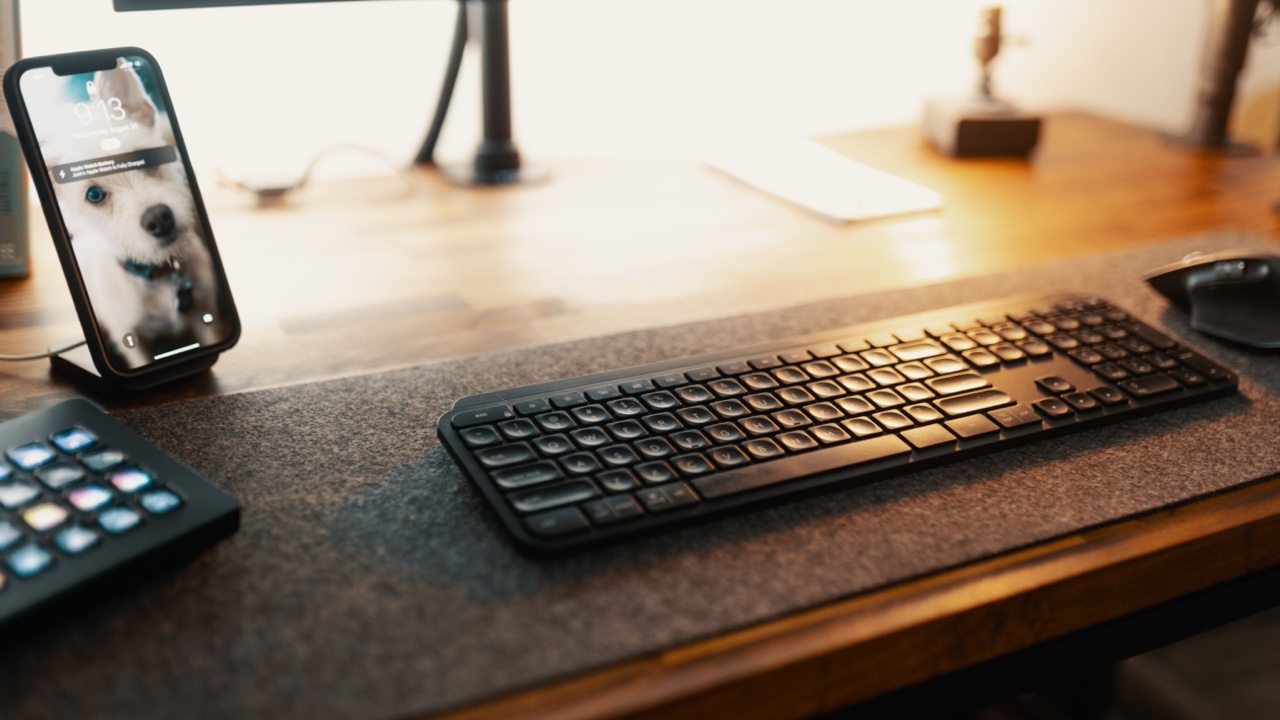
I’ve gone through more phone stands than I’d like to admit. Some were cheap enough that I didn’t feel bad about throwing them out. A few were decent but had one annoying flaw I kept working around. A couple felt solid for about two weeks before developing a wobble that made them useless. The pattern I noticed, looking back: I kept choosing based on price and basic appearance instead of the things that actually determine whether a stand works well at a desk.
It took a while to figure out what those things actually are.
Material matters more than you think
Most budget phone stands are plastic — either entirely or in the structural parts that do the actual work. Plastic is light and cheap to manufacture, and for a stand that’s going to sit undisturbed on a shelf, it’s probably fine. For something on a working desk that gets touched constantly, it’s not.
The problem with plastic isn’t fragility exactly, though that’s part of it. It’s that plastic flexes. When you reach over to tap something on your screen, the stand gives a little. When you pick the phone up and put it back, there’s a rattle or a shift. Over time, the joints loosen. A metal stand — aluminum, specifically — doesn’t do any of this. The rigidity is noticeably different from the moment you handle one. The stand stays where you put it, and the phone stays where you place it on the stand. That sounds basic, but it’s the thing I missed when I was picking stands based on photos.
Adjustability has to be real adjustability
A lot of stands advertise multiple angles, then give you three fixed positions that don’t quite match what you need. Or they have a friction hinge that holds in theory but slowly droops under the weight of the phone. Or the angle range sounds wide but is measured from a weird baseline that makes half those angles impractical.
What I actually need from a desk stand is the ability to set an angle precisely and have it stay there. If I’m using the phone to reference something while I type, I want it closer to vertical. If I’m watching something during a break, a shallower angle is easier on the eyes. If I’m on a video call and the phone is the camera, I need fine control over exactly where it’s pointing. Fixed positions don’t accommodate any of this. An arm design with genuine range of motion does.
The other piece of adjustability that gets ignored: height and reach. A stand that just props the phone up at desk level keeps the phone in your peripheral view. Something with an arm that lifts the phone a bit — or extends it toward you — is easier to actually see and interact with without hunching toward the desk.
The MagSafe question
If you have an iPhone 12 or later, the MagSafe ecosystem changes what a phone stand can do. Instead of setting your phone into a cradle or clip, you snap it onto a magnetic surface and it’s held in place with more strength than you’d expect. It also releases cleanly with one hand — you grab the phone, it comes off, and putting it back is just as easy.
The practical difference this makes at a desk is significant. A cradle-style stand works fine until you’re taking the phone on and off dozens of times a day, at which point the clip mechanism starts to feel like a friction point. A magsafe phone stand eliminates that entirely. Attachment is instant and doesn’t require looking at what you’re doing. The phone goes back to exactly the position it was in before because the magnet aligns it.
The other MagSafe advantage is orientation. Because the phone isn’t physically constrained by a cradle, you can rotate between portrait and landscape with the same stand — and some stands include stops or detents that make portrait/landscape switching feel intentional rather than accidental.
Stability under use
A stand can be perfectly stable when nothing is touching it and unstable the moment you interact with your phone. This is the test that matters: tap something on your screen without holding the stand steady. If the stand rocks or slides, it’s going to be a persistent annoyance on any desk where you do actual work.
Weight and base design both affect this. A heavier stand with a wide, low base moves less than a light stand with a small footprint. Some stands use rubber feet that grip the desk surface; these help but don’t fully compensate for a design that’s inherently unstable. The most stable desktop stands I’ve used are the ones where the base is clearly overbuilt relative to the arm — where you can tell from handling the thing that the designer prioritized staying in place.
What this actually means when buying
The specs worth paying attention to: what the stand is made of, how the angle adjustment mechanism works (and whether it holds), whether it’s MagSafe compatible if you have a recent iPhone, and whether the base design is heavy enough to stay put under normal use. Price is a secondary consideration — a stand that fails one of these will end up replaced anyway, which costs more in the long run than buying something that holds up.
Everything else — color options, bundled accessories, whether it looks interesting on a desk — is secondary. The stand either works reliably in daily use or it doesn’t. The material and mechanism determine which category it falls into.